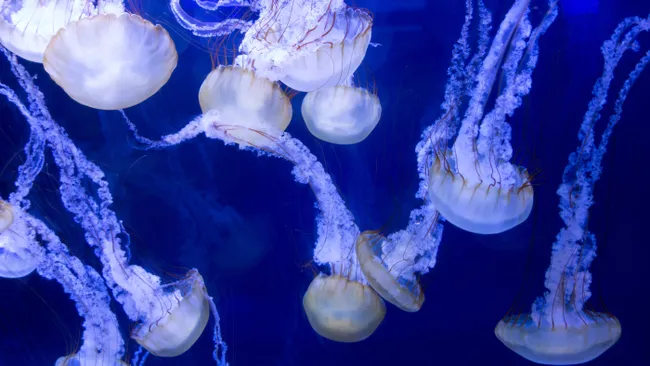
The INCOIS Jellyfish Information Portal is an interactive platform designed to address the growing importance of jellyfish occurrences along the Indian coast. Jellyfish play a dual role in marine ecosystems while they are an important part of the food web and support fisheries, they also pose significant challenges when their populations increase dramatically. On the positive side, jellyfish support biodiversity and provide economic opportunities, particularly for communities involved in edible jellyfish harvesting. However, the negative impacts are equally important: large aggregations can interfere with fishing by clogging nets, reducing catches of commercial species, and damaging gear.
Beach strandings affect coastal tourism, causing discomfort or injury to beachgoers through stings, and also create difficulties in waste management for coastal municipalities. In addition, massive aggregations near industrial sites may disrupt operations by clogging cooling water intakes at coastal powerplants, leading to costly downtime and safety risks.
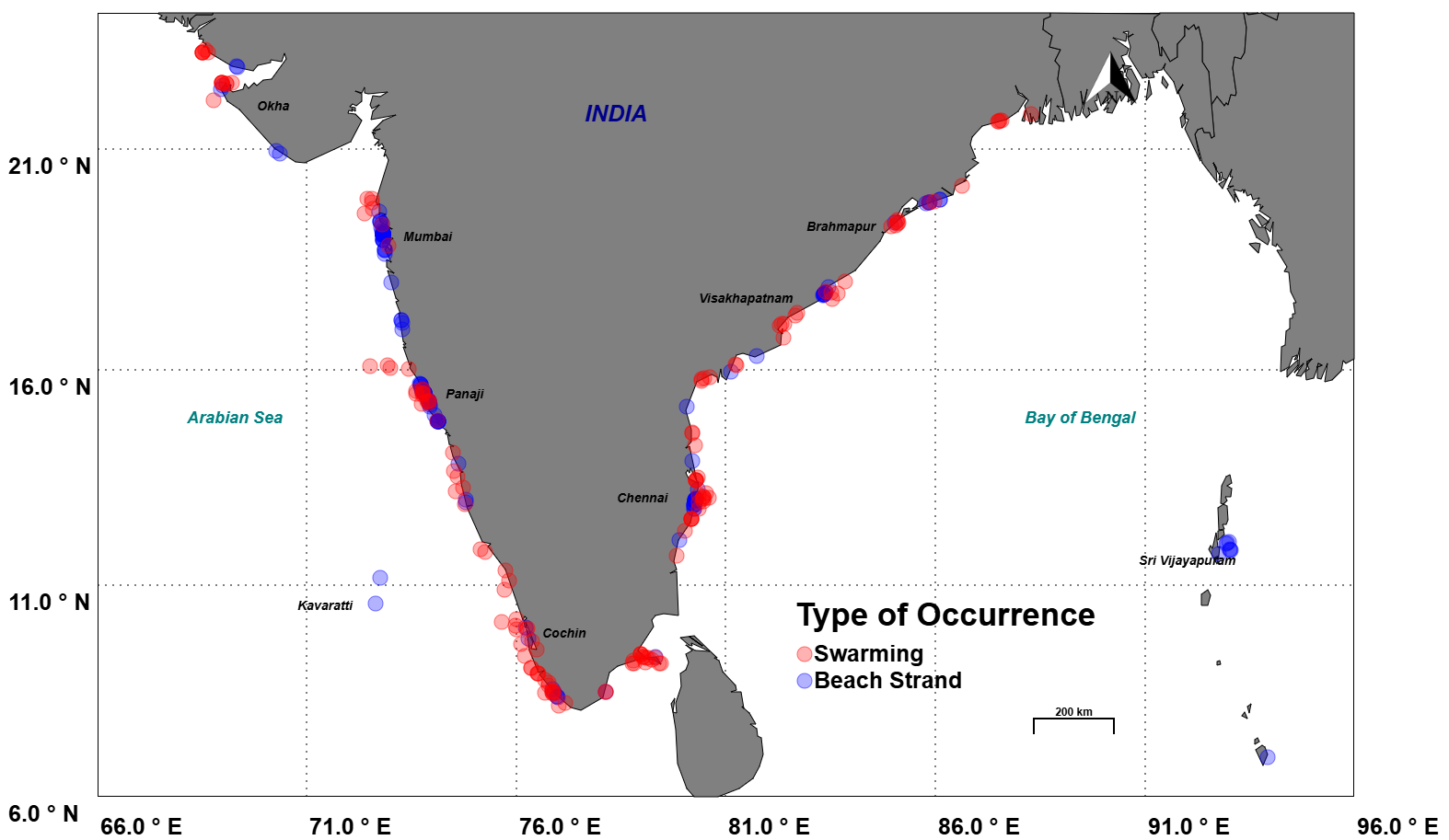
To help address these challenges, the Jellyfish interactive Information System provides location-specific insights based on the historical data records on the type of occurrence, species involved, event frequency, seasonal probabilities, and hotspot regions. This knowledge helps coastal communities and fisherfolk prepare for jellyfish events, ensuring both safety and livelihood protection. It also supports tourists and tourism operators by offering clear visuals, hotspot information, and sting management guidelines, improving coastal safety and trust in recreational activities. Pollution control authorities, coastal management agencies, and environmental organizations can use the platform as a decision-support tool to link jellyfish trends with coastal pollution, eutrophication, and climate variability, while researchers gain access to a consolidated and continuously updated information on jellyfish aggregation occurrences.
An important feature of this portal is its citizen science approach, which allows the registered users to actively participate by reporting jellyfish sightings from beaches and coastal waters. These community contributions enrich the database, enabling the system to reflect near-real-time jellyfish activity and locations, complementing scientific data with ground-level observations.
The data presented in the Jellyfish Information System is derived from a rich collection of historical observations, published studies, more recent reports from news and media sources, GBIF, filed observations. While it does not provide continuous real-time monitoring, it reflects near-real-time trends alongside reliable historical patterns, offering trustworthy guidance. Through interactive maps, charts, and species-specific insights, the portal contributes to preparedness, public safety, and sustainable coastal management. By addressing both the risks and opportunities associated with jellyfish, the system supports multiple Sustainable Development Goals (SDGs), including Good Health and Well-being, Sustainable Cities and Communities, Responsible Consumption and Production, and Life Below Water.